Portrait story / Ottawa bookshop
Among Books.
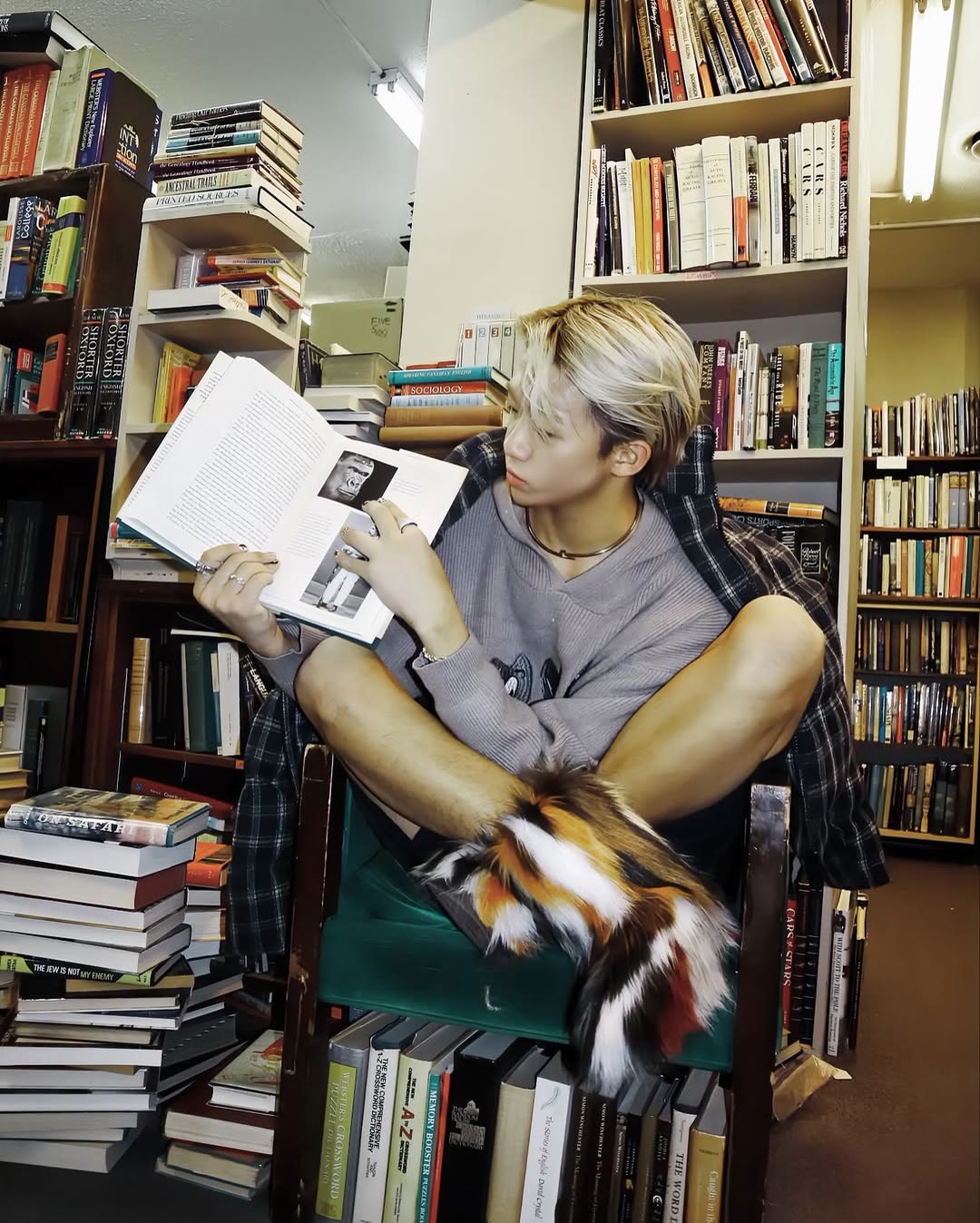
We could not call across the room, repeat instructions loudly or turn the bookshop into a set.
The portrait had to be made at the volume the place allowed.
01 / Intent
Let the room remain itself.
The idea was to make a fashion-aware portrait inside a space already crowded with its own character.
Books filled almost every part of the frame: orderly rows, leaning stacks, worn covers and narrow passages. Trying to simplify the room would have removed the reason to photograph there. Instead, the visual density became part of the subject’s presence.
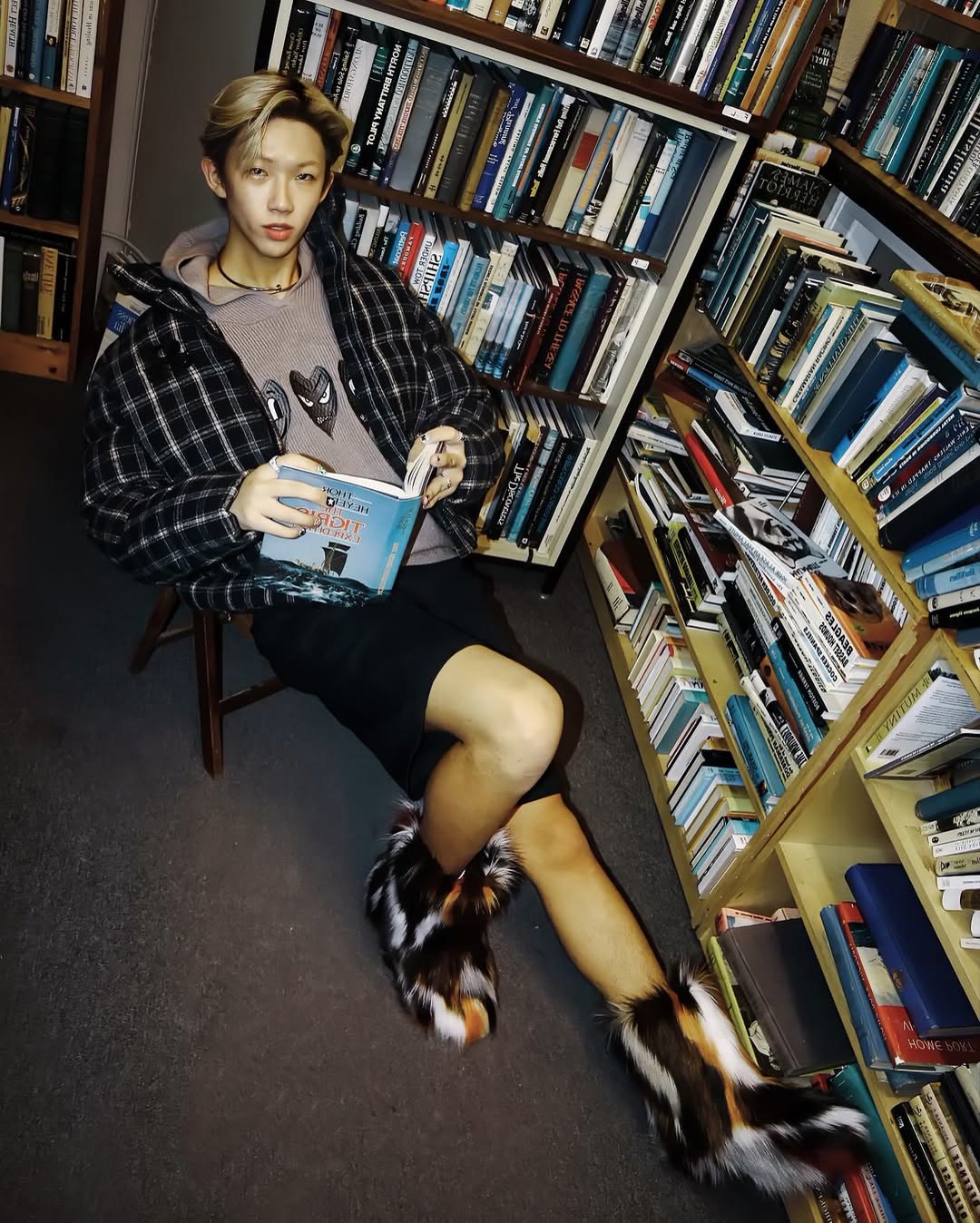
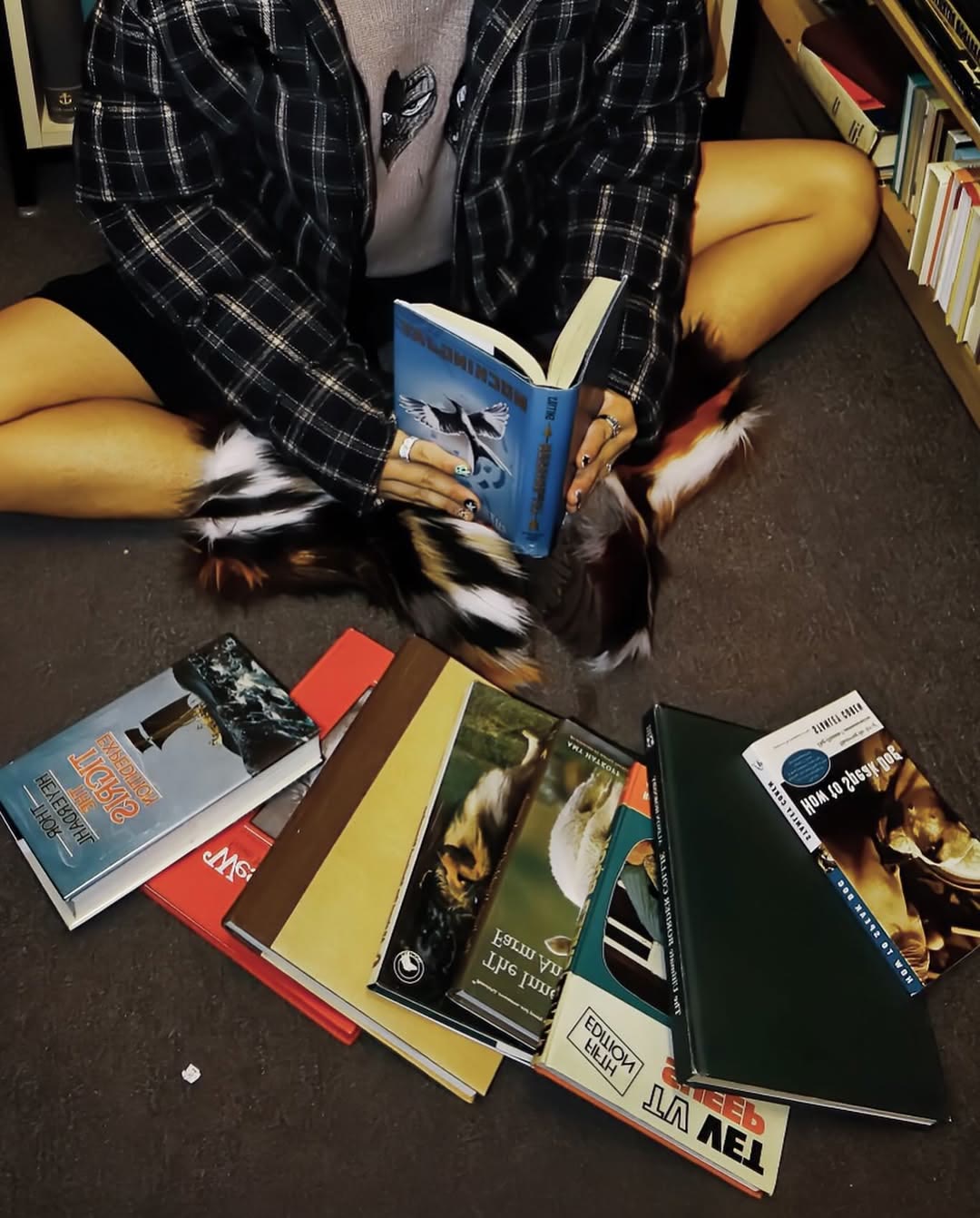
The clothes brought another layer of pattern—the checked jacket, graphic knit and exaggerated fur boots. The portrait did not need a clean background. It needed enough confidence to let the person and the room compete a little.
02 / Conditions
Working at the volume of the room.
A bookshop asks for a different kind of attention. We had to photograph quietly, keep our movements contained and avoid letting the session take over the space.
That restriction changed the pace. There was no calling instructions from the other end of an aisle or repeating the same action until it became mechanical. Each setup had to be understood quickly, then photographed before too much explanation disturbed the moment.
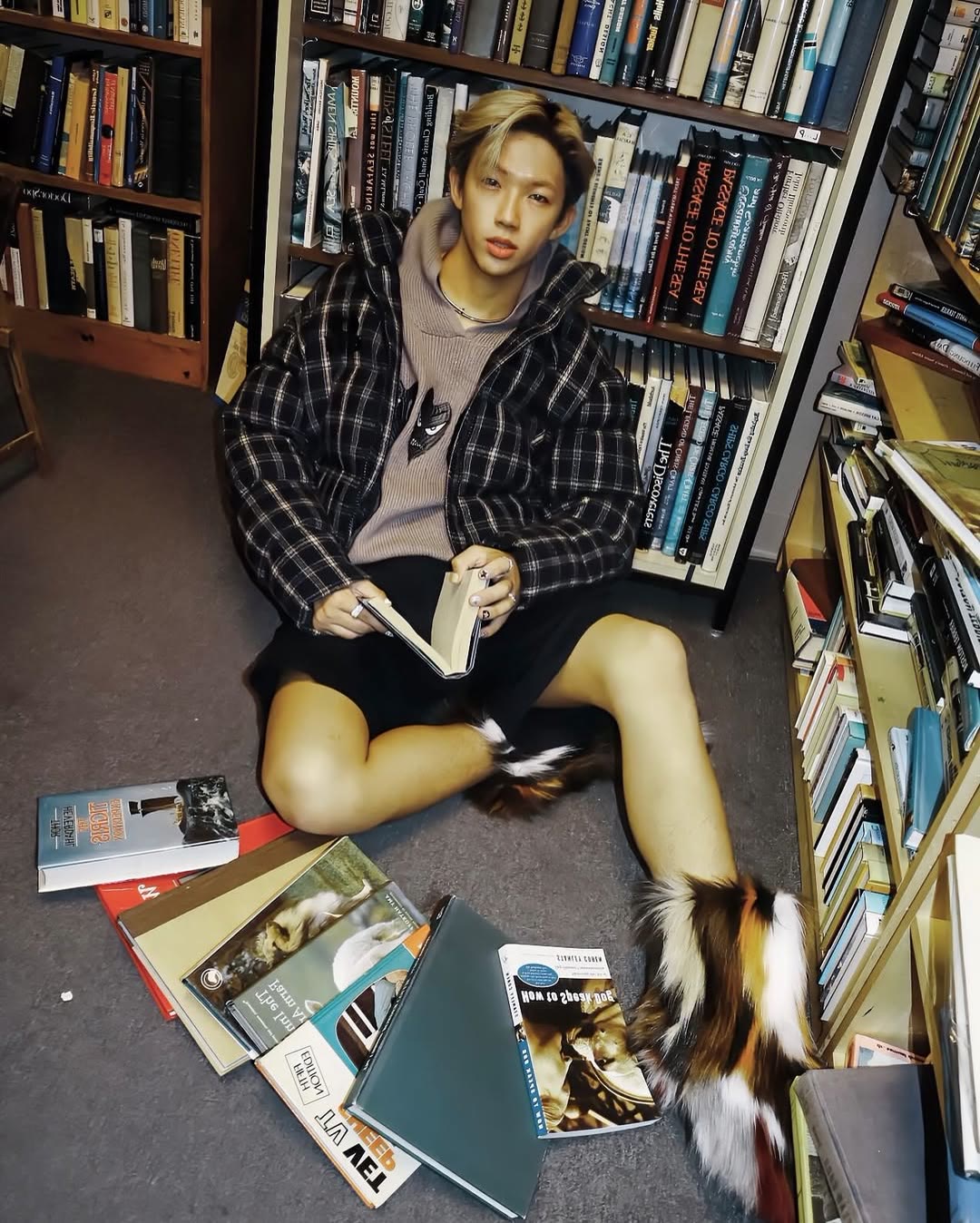
The narrow aisles also limited distance. Shelves stayed close to the body, books entered from every edge, and the camera often had to work from above or just outside the subject’s reach.
Silence was not the absence of direction. It changed the form direction had to take.
03 / Direction
A glance, a page, a pause.
Most of the direction became small enough to communicate without a conversation: lower the eyes, find the camera, turn one page, hold there.
The books gave the hands something real to do. Sitting low between the shelves made the body part of the shop’s geometry rather than placing a model in front of a literary backdrop. From above, the scattered covers, crossed legs and open pages formed a single field of shape and colour.
I kept the light direct and the framing close. That choice preserved the slightly improvised energy of the location—the sense that these photographs were found inside the room, not polished until the room disappeared.
04 / Finish
Quiet does not have to mean still.
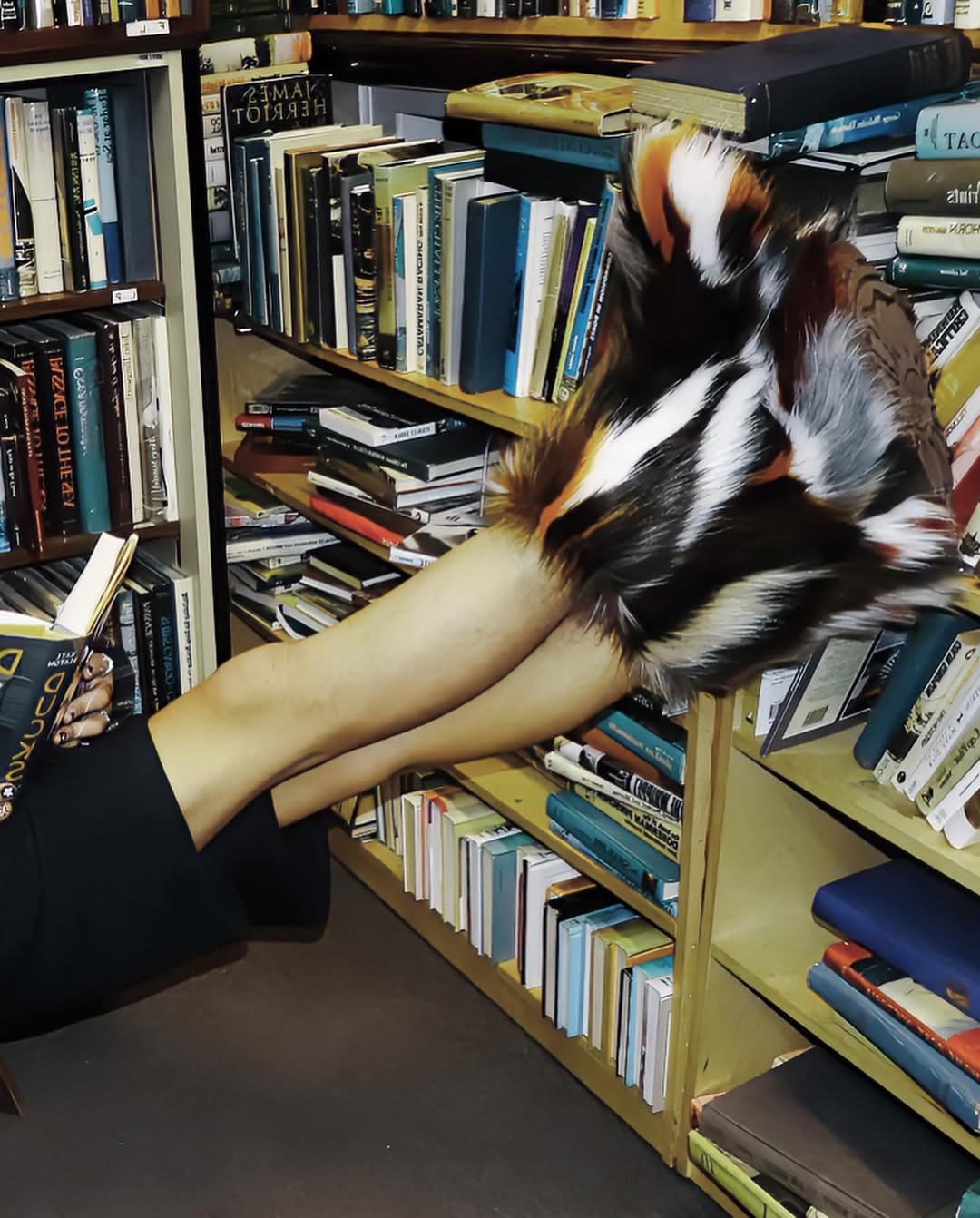
The finished series moves between complete portraits and fragments. Some frames meet the subject’s expression directly. Others stop at the hands, an open book, patterned boots or a body partially hidden by the shelves.
The quiet is not visible as silence. It is visible as attention.
Together, the photographs hold more than a face. They hold the clothes, posture, surroundings and the concentration required to make something without announcing that it was being made.